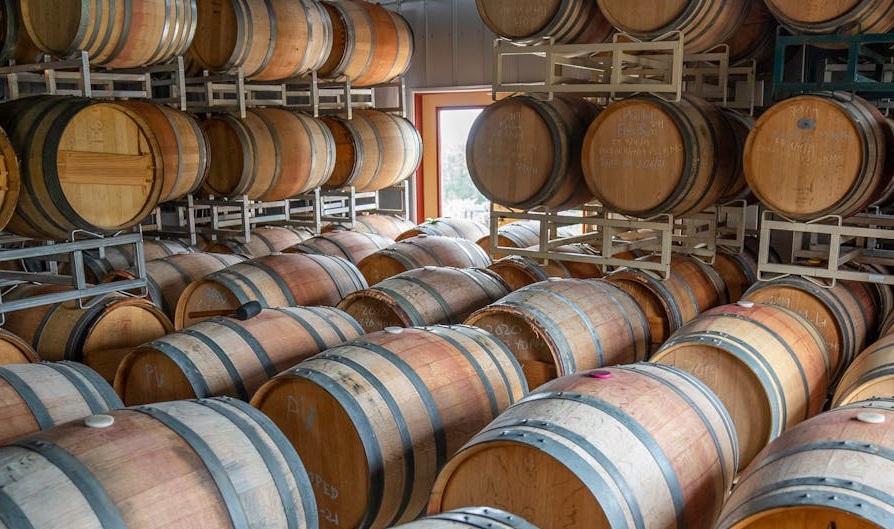
For many wine drinkers, oak is one of the most recognisable flavours in a glass. Vanilla, spice, toast, smoke, it’s all often thanks to the barrel. But in recent years, a shift has been happening in Australian winemaking. The bold oak signatures of the past are giving way to subtler, more thoughtful, and more textural expressions.
This post explores how Australian winemakers are rethinking their use of oak. Instead of abandoning it, they are applying it more gently to let the fruit and vineyard character shine.
A Quick Look at What Oak Does
Oak barrels play several important roles in modern winemaking, including:
- Flavour: They add notes like vanilla, coconut, clove, or toast.
- Texture: Oxygen exchange softens tannins and builds roundness.
- Maturation: Slower development and integration of wine components.
The impact depends on factors like the age of the barrel, type of oak (American vs French), size of the vessel, and how heavily the barrel has been toasted during production.
From Power to Precision
In the 1990s and early 2000s, Australian wines especially Shiraz and Chardonnay were often known for bold oak signatures. But tastes have changed. Many producers now seek balance rather than dominance, using oak to support the wine instead of define it.
This shift has led to:
- Reduced use of new oak
- More older, neutral barrels
- Introduction of larger formats like puncheons and foudres
- Alternative materials (concrete eggs, stainless steel, clay amphora)
The goal is to preserve the clarity of fruit, express the vineyard site, and build complexity through subtlety rather than showiness.
Barrel Sourcing and Customisation
Many winemakers are now very particular about where their barrels come from, selecting specific cooperages in France or the US, and even customising toast levels. Some choose tight grain oak for slow integration, while others opt for light toast to reduce vanilla and char.
Others are experimenting with hybrid vessels: combining stainless steel with oak staves or using clay-lined barrels to moderate oxygen exposure while adding texture.
These choices are about fine-tuning, not formula. Today, oak is part of the toolbox, not the headline act.
White Wines and Oak Evolution
The oak discussion isn’t limited to reds. In Chardonnay especially, oak use has become more restrained:
- Margaret River Chardonnays might still see barrel fermentation but with gentle lees stirring and minimal new oak.
- Yarra Valley and Tumbarumba Chardonnays often show only subtle barrel influence, focusing on tension, citrus, and mineral drive.
Even in styles like Fiano or Grüner Veltliner, some producers are using old oak to add texture rather than flavour.
Final Sip
Oak isn’t disappearing, it’s maturing. In Australia, it’s no longer about how much oak you can taste, but how well it integrates. Used thoughtfully, oak becomes less of a flavour and more of a frame, giving structure, softness, and longevity while letting the fruit and place speak clearly.
The next time you open a bottle, take a moment to notice how the oak presents and how much more there might be to the wine beyond it.
 Bush & Barrel
Leave a comment