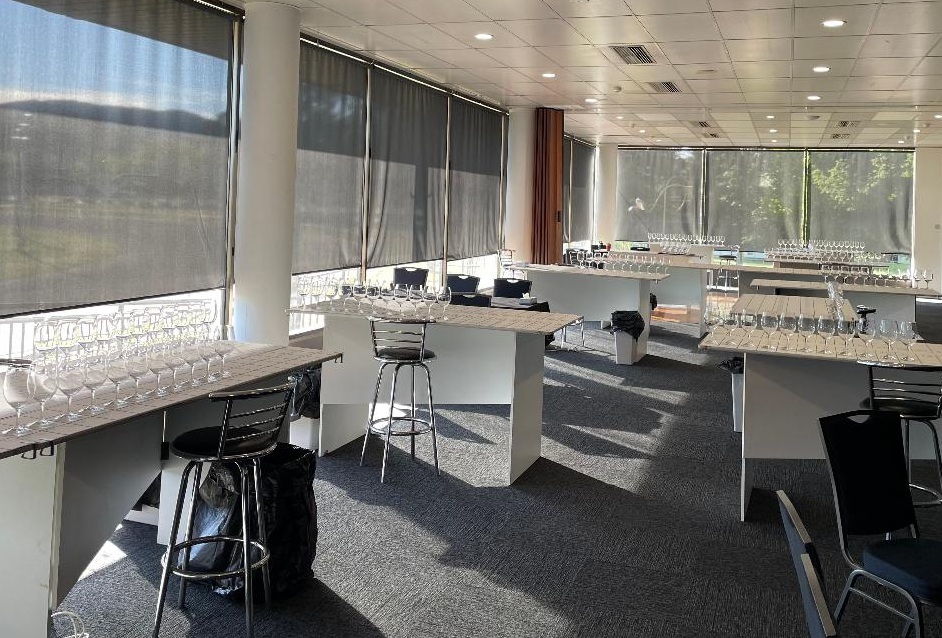
Earlier this November, I took part in a Wine Judge Training Course held by the Australian Society of Viticulture and Oenology (ASVO), delivered in partnership with the Canberra and Region Wine Show. I was selected as one of four people to join this pilot course, an immersive and structured program designed to build the skills needed for professional judging. Completing it has given me the confidence to take the next step and apply as an associate judge at wine shows around Australia.
How Does Judging Really Work?
Although I had experience tasting wine, I had never been part of a structured judging environment. This program placed us directly inside the process. We worked as an additional judging panel, assessing real show entries under authentic show conditions. We tasted a wide range of varieties from the Canberra and surrounding regions, including Riesling, Chardonnay, Shiraz, Pinot Noir, and others, all in silence. We recorded our scores, wrote our comments, and then submitted our assessments under the guidance of our trainer, Adrian Sparks, a respected panel chair and educator.
During the course we worked with the 100-point scoring system used in many Australian wine shows. Gold medals were awarded to wines scoring between 95 and 100 points, silver medals to those between 90 and 94, and bronze medals to wines scoring from 85 to 89.
Calibration quickly became one of the core lessons. Each judge brought a slightly different palate and perspective to the table, and the goal is not to match scores but to understand how each person arrives at their assessment. After each class, we recorded our scores and comments independently and submitted them before any discussion. Only then did we come together with the chair panel to review the results, talk through differences, and decide which wines deserved to be called back for another look, often those sitting around the gold boundary. These conversations showed how important clear language and focused reasoning are in a professional judging environment.
Inside a Professional Judging Room
The judging sessions moved with steady focus. Flights of wines arrived one after another, and each required careful attention for clarity, balance, fruit definition, complexity, length, and any signs of fault. All scores and comments were entered into the ShowRunner application, which manages results and scoring throughout the wine show. Seeing how the system brought our individual assessments together gave me a new appreciation for the structure behind each final result.
Panel discussions after each class tasting for final consensus were calm and disciplined. Adrian guided the flow with patience, ensuring each voice was heard while keeping the focus on what was in the glass. What stood out most was the sense of quiet professionalism. Every judgement had purpose, and comments were expected to be clear, focused, and grounded in what was actually in the glass.
At times Adrian invited Shanteh Wale, the Chair of Judges, to join us and offer her perspective on our final selections. We also had the chance to listen to the discussions among the judging panels, which was invaluable for understanding how experienced judges frame quality, articulate structure, and reach consensus.
Throughout the program we were supported by Chrissie Smith, a Director of the ASVO, whose presence created a welcoming and encouraging atmosphere. Her commitment to developing the next generation of show judges was clear from the beginning.
A Step Toward the Judging Path
Completing this program felt like an important milestone. It showed me how wine shows operate from within and clarified what is expected from an associate judge. The training strengthened my confidence and confirmed that this is a path I want to continue. And importantly, the skills gained here are relevant to any judging environment across Australia, giving me a clearer sense of how I can grow within the show system.
Final Sip
Walking out of the judging room on the final day, I understood judging in a new way. It is not simply about tasting many wines. It is about clear communication, careful listening, disciplined scoring, and the systems that keep the process fair. My thanks to Adrian Sparks for his thoughtful guidance, and to Chrissie Smith for her support throughout the program. This experience opened a new door, and I am excited to take the next steps in the world of wine show judging.
 Bush & Barrel
Leave a comment