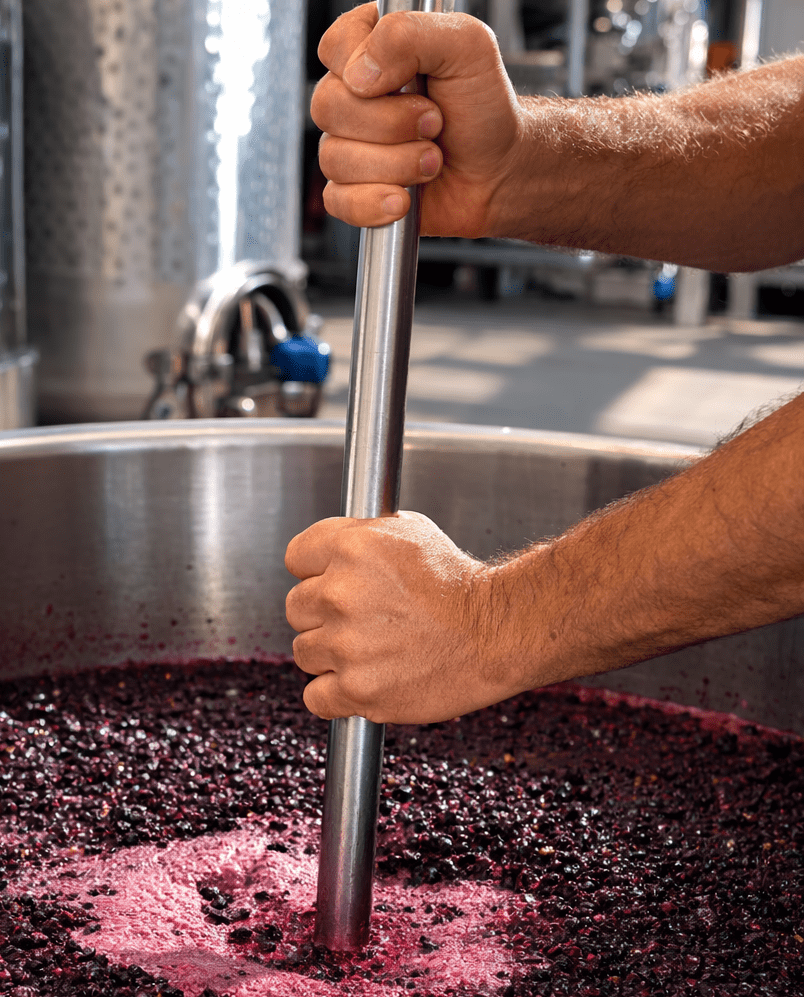
During fermentation, the most important decisions are often the quiet ones. Beneath the surface of bubbling must, a layer of skins, seeds and pulp rises to form the cap. Cap management is a set of choices that influence how tannins are extracted, how colour develops and how oxygen interacts with the wine. The decision is rarely about tradition alone. It is about texture, structure and the style the winemaker hopes to reveal.
Gentle Hands or Firm Direction?
In the fermenter, extraction can be guided gently or driven with intent. Cap management is not about choosing the “best” technique. It is about interpreting fruit in a particular season and site. In Australia, where sunlight often delivers ripeness with ease, the winemaker’s role becomes one of calibration. Too little extraction may leave wines charming but short-lived. Too much can obscure vineyard character beneath weight.
Understanding how these techniques shape tannin quality, oxygen integration and colour development allows us to read Australian reds more thoughtfully. What feels like structure in the glass may be as much about fermentation decisions as terroir.
Pigeage: Precision and Finesse
Pigeage, or punching down, is often the most delicate approach. By gently submerging the cap, winemakers encourage extraction mainly from skins while largely avoiding harsher seed tannins. Oxygen exposure remains relatively limited, and juice movement is gentle.
In Australian terms, pigeage often suits wines where fragrance and texture matter more than sheer power. Shiraz from cooler regions such as the Yarra Valley or Adelaide Hills can benefit from this restraint, showing lifted aromatics, finer tannins and a sense of detail. Pinot Noir producers frequently rely on pigeage to preserve purity and avoid overworking already expressive fruit. Grenache, particularly from sandy sites in McLaren Vale or the Barossa, can also respond well to gentler handling, retaining brightness and flow rather than developing excessive grip.
Remontage: Building Structure
Remontage, or pump over, introduces more movement. Wine is drawn from the bottom of the fermenter and sprayed over the cap, increasing extraction and oxygen contact. Depending on frequency and intensity, this technique can bring both skin and seed tannins into the wine.
In warmer Australian regions, remontage is commonly used for varieties like Cabernet Sauvignon or Shiraz where structure and ageing potential are desired. It allows winemakers to balance generous fruit with sufficient tannin framework. The resulting wines often feel broader and more assertive, yet still capable of graceful evolution.
Délestage: Power with Polish
Délestage, or rack and return, is perhaps the most dramatic of the three. The fermenting wine is completely drained away from the skins before being returned, collapsing the cap and rewetting it thoroughly. This process increases colour extraction and oxygen exposure while encouraging earlier tannin integration.
For premium Australian Shiraz or Cabernet intended for long maturation, délestage can help achieve both concentration and refinement. Wines produced with this technique may show deep colour, polished tannins and a sense of controlled power rather than raw extraction.
Final Sip
Every fermentation is a conversation between fruit, vessel and human judgement. Whether through the quiet rhythm of pigeage, the steady discipline of remontage or the bold reset of délestage, cap management shapes how Australian wines move from exuberant fruit to lasting expression. When we taste tannin, texture and depth, we are tasting not only the vineyard, but the choices made beneath the cap.
 Bush & Barrel
Leave a comment