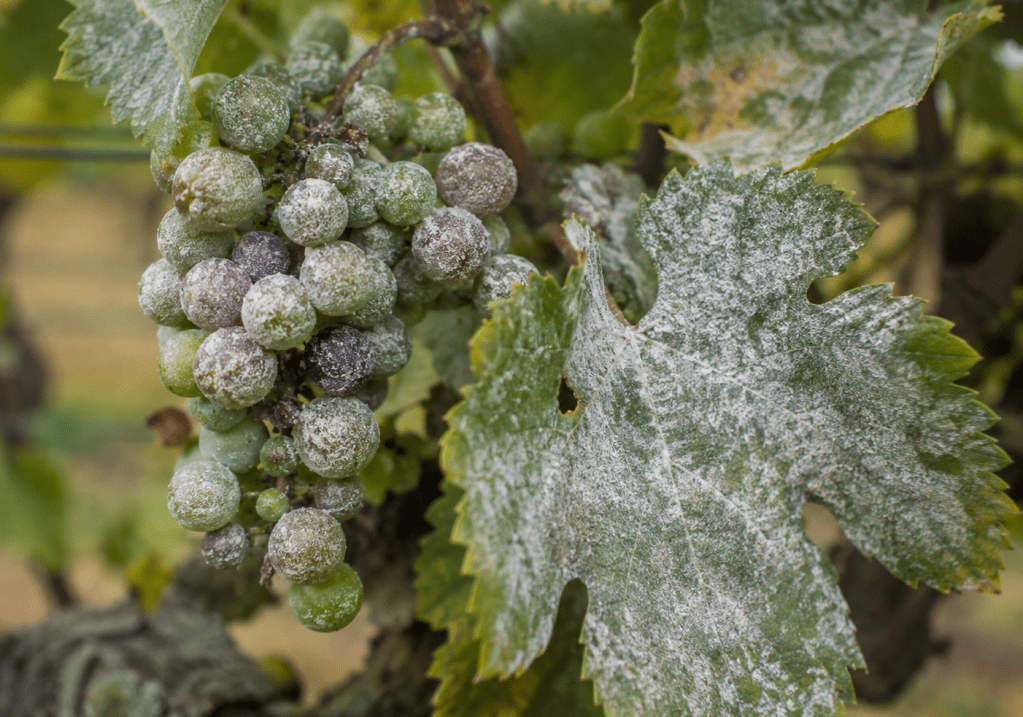
Across Australian vineyards, balance is rarely shaped by growth alone. The movement of air through the canopy, the spacing between leaves, and the gradual pressure building beneath dense foliage all influence the health of the vine long before harvest approaches. Caused by the fungal pathogen Erysiphe necator, powdery mildew often emerges within these quieter conditions, spreading through warmth, shade, and restricted airflow as the season unfolds.
The Quiet Conditions Beneath the Canopy
The vineyard rarely changes all at once. Pressure gathers gradually beneath dense canopies, settling into still air long before symptoms become fully visible across the rows. Powdery mildew moves through Australian vineyards this way; quietly, persistently, and often beneath otherwise healthy growth.
Powdery mildew affects grape leaves, shoots, and berries across many Australian wine regions. Yet the disease is rarely shaped by infection alone. Canopy density, airflow, sunlight exposure, and seasonal warmth all influence how quickly mildew establishes itself during the growing season.
In many vineyards, the earliest pressure begins not with visible damage, but with slowing movement inside the canopy itself.
Growth, Density, and Seasonal Pressure
Spring growth brings energy into the vineyard. Shoots lengthen rapidly, foliage thickens between rows, and the canopy gradually expands as temperatures rise through the season. In balanced conditions, this growth supports ripening, protects developing fruit, and helps regulate the vine during warmer periods.
But vigorous growth can also narrow the spaces where air and sunlight move most freely. Unlike many fungal diseases, powdery mildew does not require heavy rainfall to spread. Warm temperatures and sheltered canopy conditions are often enough for infection to establish itself across leaves and fruit. Dense foliage and shaded bunch zones create protected environments where fungal pressure can increase long before symptoms become obvious from above the rows.
The vineyard continues growing outward, while airflow beneath the canopy begins to slow.
Why Airflow Matters in Australian Vineyards
Across Australian viticulture, airflow remains closely connected to vineyard balance. Sunlight exposure and canopy openness influence more than ripening alone; they shape the environmental conditions surrounding the vine each day.
When air movement becomes restricted, humidity can persist beneath dense foliage for longer periods, creating favourable conditions for fungal development. Shaded fruit zones may also reduce spray coverage and limit the vineyard’s ability to dry and regulate itself naturally through warmer parts of the season.
This is why canopy management remains central to mildew prevention across many Australian wine regions. Practices such as winter pruning, shoot thinning, leaf removal, and canopy positioning all help maintain openness through the vine. These decisions influence how light enters the canopy, how quickly moisture dissipates, and how effectively air continues moving between rows as temperatures rise toward summer.
Timing and Vineyard Observation
Managing powdery mildew is rarely a matter of reacting after visible infection appears. By the time symptoms spread clearly across leaves or fruit, pressure may already be well established within the vineyard. Early-season monitoring therefore becomes critical. Vineyard observation, spray timing, and canopy control all work together to reduce the conditions where mildew can settle and spread through the growing cycle.
Different Australian wine regions experience these pressures through their own climatic rhythms. In Hunter Valley, humid seasonal conditions can increase canopy pressure during warmer parts of the growing cycle, particularly when dense foliage begins limiting airflow around developing fruit. Further south in Yarra Valley, cooler temperatures and extended growing seasons may allow fungal pressure to persist gradually beneath sheltered canopies later into the season. Meanwhile, maritime regions such as Margaret River continue balancing coastal airflow with vigorous seasonal growth as vineyards move toward ripening.
Across climates and regions, the broader challenge remains remarkably similar: maintaining balance between healthy vine growth and environmental openness beneath the canopy.
Final Sip
Powdery mildew continues to remind growers that vineyard health depends as much on balance as intervention. The vine responds constantly to warmth, shade, airflow, and seasonal pressure, carrying each adjustment quietly through the growing season toward harvest.
In Australian viticulture, managing mildew is rarely about complete control. It is an ongoing process of observation and restraint, where canopy growth, sunlight exposure, and airflow remain closely connected to the long-term health of both vineyard and fruit.
And often, the most important changes inside the vineyard begin long before they become visible across the rows.


Leave a Reply