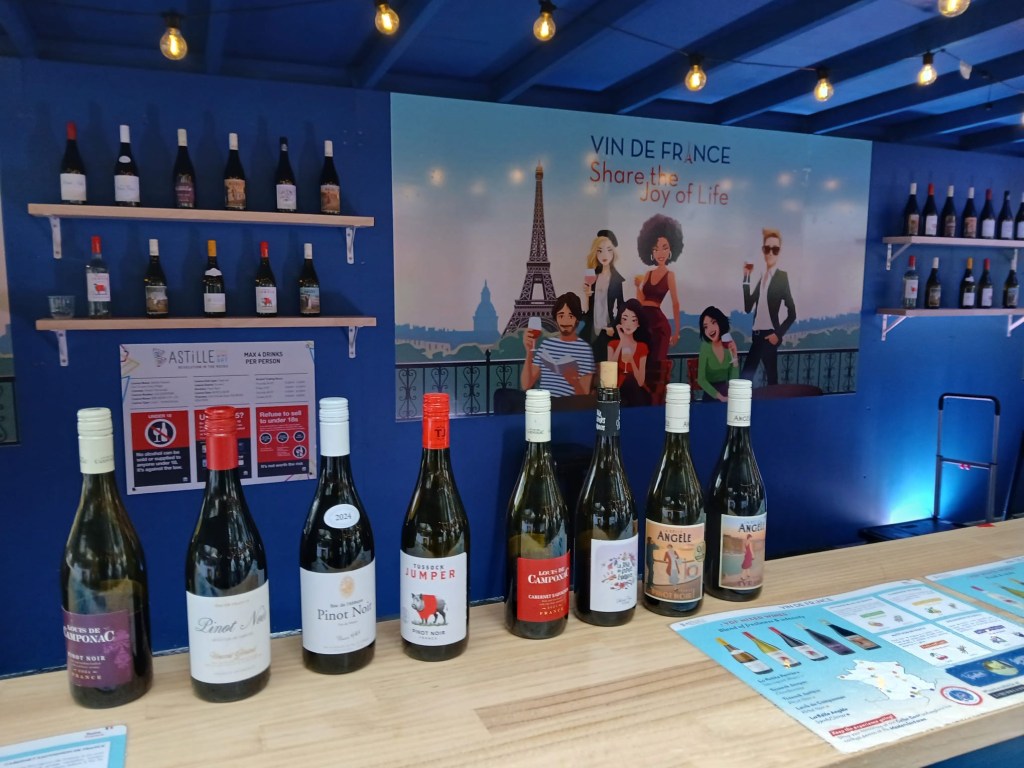
Most Australian wine lovers choose wine by grape variety. Whether it’s Chardonnay, Shiraz, Pinot Noir or Sauvignon Blanc, we usually know what we like and head straight to that section of the wine shop.
French wine can be a little different to navigate. Labels often highlight the region rather than the grape variety, which can make choosing a bottle feel less straightforward. That’s one of the reasons Vin De France was created.
I recently had the opportunity to speak with two representatives of Anivin de France: Nicolas Gorjux (Marketing Manager) and Marine Descombes (President) during the Bastille Festival in Sydney. Anivin de France is the wine trade organisation dedicated to the Vin De France (VDF) designation. We talked about what makes Vin De France unique and why it is becoming increasingly relevant for Australian wine lovers.
So, what exactly is Vin De France?
As Nicolas explained during our conversation, France has three official wine categories.
The most widely recognised is AOP (Appellation d’Origine Protégée), formerly known as AOC (Appellation d’Origine Contrôlée), which includes famous names such as Bordeaux, Chablis, Beaujolais and Champagne. These wines come from defined regions and follow strict production rules designed to protect where the wine comes from and how it is made.
The second category is IGP (Indication Géographique Protégée),which also identifies wines from recognised geographical regions but gives producers a little more flexibility.
The third is Vin De France, introduced with the 2010 vintage. Unlike the other two categories, it allows producers to source grapes from across France and clearly display the grape variety on its label. It also gives winemakers more freedom to create different wine styles and respond to changing conditions.
Why does Vin De France matter?
For Australian wine lovers, probably more than you might think. Nicolas pointed out that most Australian wine shops are organised by grape variety rather than region. If you enjoy Sauvignon Blanc or Chardonnay, that’s usually the section you’ll head to first.
French wine doesn’t always work that way. A bottle from Burgundy, for example, may simply say Bourgogne on the label without mentioning Chardonnay at all. Unless you’re already familiar with France’s wine regions, choosing a bottle can feel a little confusing.
Vin De France helps remove that uncertainty by clearly displaying the grape variety on the label. It makes French wine easier to choose while still respecting the traditions that make it unique.
More freedom for producers
Our conversation quickly moved beyond labels. One theme kept coming up during the interview: freedom.
As Nicolas explained, Vin De France allows producers to source grapes from different regions of France when needed. That flexibility has become increasingly valuable as growers deal with heatwaves, frost and storms affecting different parts of the country.
But that’s only part of the story. With fewer production restrictions, producers have more freedom to experiment and respond to changing consumer tastes. Whether it’s lighter reds, alcohol free wines or low alcohol wines, Vin De France gives winemakers the flexibility to explore new ideas.
Marine was keen to point out that this doesn’t mean producers are abandoning France’s traditional wine categories. Many wineries produce AOP, IGP and Vin De France wines, with each serving a different purpose.
Rather than replacing France’s famous appellations, Vin De France gives producers another way to innovate while respecting tradition.
Why Australia?
One question I was particularly interested in was why Australia has become such an important market for Vin De France.
Nicolas explained that the category entered the Australian market in 2017 and has continued to grow ever since. He believes local consumers quickly embraced the concept because choosing wine by grape variety is already second nature here.
Marine agreed, explaining that Australia’s long-standing appreciation for French wine makes it a natural market for the category’s continued growth.
The good news is that you don’t have to travel to France to try it. Nicolas said Vin De France wines are now available through major retailers, including Dan Murphy’s and Liquorland, as well as many independent wine merchants. The easiest way to recognise one is simply to look for the words “Vin De France” on the label.
A New Way to Discover French Wine
One thing became clear throughout my conversation with Nicolas and Marine. Vin De France isn’t trying to replace France’s famous appellations or wine regions. Instead, it offers another way to discover them. For someone who enjoys Chardonnay or Pinot Noir but feels unsure about choosing a French wine, a bottle labelled Vin De France can be a great place to start. From there, it’s easy to become curious about the producers, the regions and the traditions behind the wine.
As Nicolas put it, “Wine should first and foremost be about pleasure and sharing good moments with others.”
That simple idea stayed with me long after our conversation. Vin De France isn’t about making French wine less French. It’s about making it easier for more people to discover, enjoy and appreciate everything French wine has to offer.
Final Sip
Australian wine lovers have always enjoyed exploring new grape varieties, regions and wine styles. Vin De France offers another opportunity to do exactly that.
It doesn’t replace the traditions that have made French wine famous. Instead, it offers an approachable way to begin exploring French wine. Whether you come across a bottle at your local wine merchant or while travelling through France, look for the words “Vin De France” on the label. You might just discover a producer, a region or a style of wine you hadn’t considered before.
For me, that’s what makes Vin De France so interesting. It’s not about changing French wine. It’s about making it easier to discover.


Leave a Reply