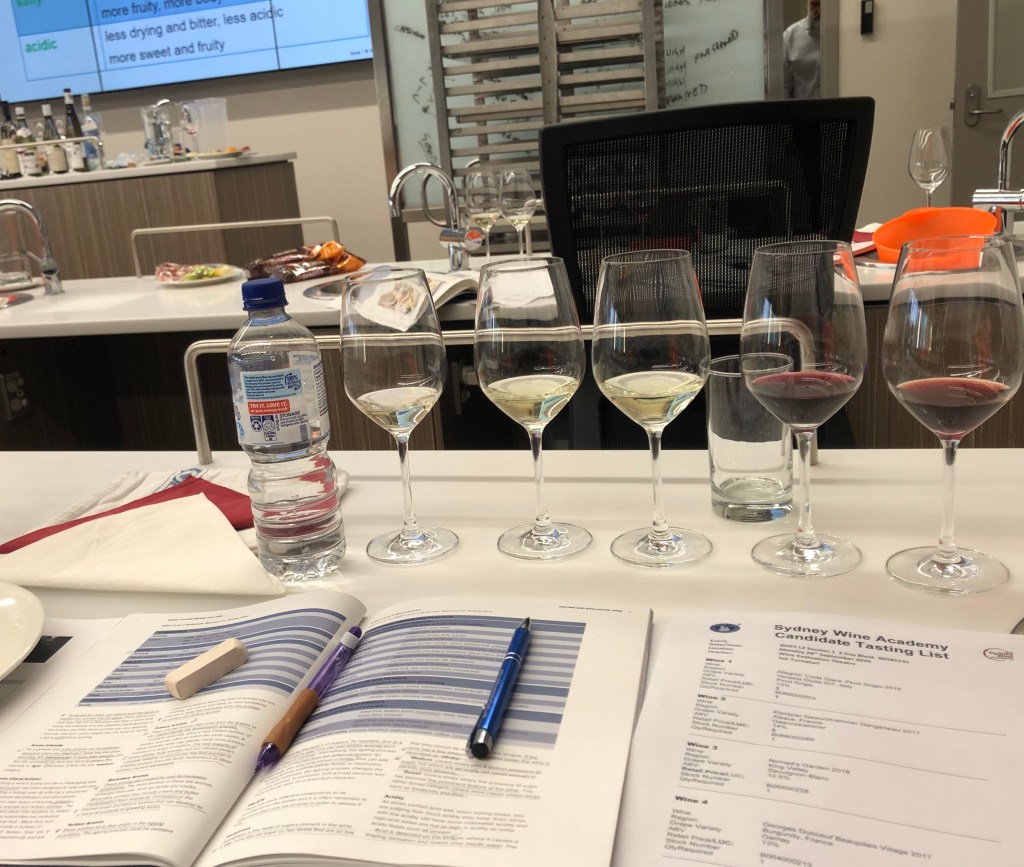
I’ve been asked a few times what someone should study if they want to work in wine. It sounds like a simple question, but there really isn’t one answer. It depends on what you actually want to do.
Do you want to make wine? Spend your days in the vineyard? Become a sommelier? Teach wine? Develop your tasting skills? Or perhaps you simply love wine and want to understand it at a much deeper level?
In Australia, there are plenty of ways to study wine. Some lead through university or TAFE, while others, such as the Wine & Spirit Education Trust (WSET) and the Court of Master Sommeliers (CMS), offer internationally recognised wine education pathways. They all involve wine, but they don’t take you to exactly the same place.
If You Want to Make Wine or Grow Grapes
If your goal is to become a winemaker, studying oenology or wine science is one of the most direct routes. If you’re more interested in what happens in the vineyard, viticulture may be a better fit.
Oenology takes you into the science behind winemaking. You learn what happens during fermentation, how microorganisms affect wine, how grape chemistry influences the finished product and why decisions in the winery matter.
Viticulture takes you back to where wine begins: the vineyard. It covers areas such as soils, vine growth, irrigation, canopy management, pests and diseases, climate and grape quality.
In Australia, universities such as Adelaide University and Charles Sturt University offer wine-focused degrees. Adelaide combines viticulture and oenology in its bachelor’s degree, while Charles Sturt’s Bachelor of Wine Science includes both winemaking and viticultural science. Vocational pathways are available too, including viticulture and wine industry qualifications through providers such as TAFE SA in South Australia, GOTAFE in Victoria and TAFE NSW.
The connection between vineyard and winery is important. Decisions made in the vineyard can influence what eventually happens in the winery, so understanding both sides can be valuable. But this is also where practical experience matters. You can study fermentation in a classroom, but working through vintage brings it to life. The same is true in the vineyard: seeing how sunlight, airflow, disease pressure and vine growth interact gives the theory real context.
If either the winery or vineyard is where you picture yourself, combining study with hands-on experience is one of the best ways to understand where you fit.
If You Want to Understand Wine More Broadly
WSET takes a different approach from studying to become a winemaker. Its focus is broader: how grapes are grown, how wines are made, the world’s wine regions and styles, what influences quality and price, and how to taste and assess wine in a structured way.
WSET offers four levels in wine, culminating in the Level 4 Diploma in Wines. As you move through the levels, the depth increases considerably, along with the emphasis on understanding why wines taste the way they do and what influences their style and quality.
This can be useful for people working in wine education, sales, retail, importing, distribution and wine communication, as well as those wanting to strengthen their tasting and assessment skills. And the pathways can cross over. A winemaker might take WSET to broaden their knowledge of the world’s wines, while a sommelier might use it to strengthen theory and tasting.
You don’t necessarily have to choose one education system and stay inside it forever.
If You Want to Become a Sommelier
If you see yourself working with wine in restaurants, hotels or other hospitality settings, the Court of Master Sommeliers takes another approach. The CMS pathway places a strong emphasis on wine theory, tasting and something particularly important to sommeliers: service.
Knowing Barolo from Brunello is one thing. Being able to talk confidently with a guest, understand what they enjoy, recommend an appropriate bottle, make food and wine recommendations and serve wine professionally is another. For students in Australia, the CMS pathway starts with the Introductory Sommelier Course and can progress through Certified and Advanced Sommelier, with Master Sommelier as the highest level.
WSET and CMS are sometimes compared, but I don’t think they need to be viewed as competitors. They have different emphases. WSET takes a broader approach to wine knowledge and tasting, while CMS is strongly connected to the skills required in professional wine service.
Some people study both.
Final Sip
There is no single “best” wine qualification because there is no single wine career. If you want to make wine, look closely at oenology and wine science. If the vineyard fascinates you, explore viticulture. If you want broad international wine knowledge and structured tasting skills, WSET may suit you. And if you see yourself working with wine in hospitality, CMS is certainly worth investigating.
But whichever direction you choose, don’t forget the part that can’t be learned entirely from a textbook. Work a vintage. Walk vineyards. Visit wine regions. Attend tastings. Talk to growers, winemakers and sommeliers. Taste wines from places you don’t know. Ask questions.
Qualifications can give you knowledge and structure, but experience is where much of that knowledge begins to make sense. So if someone asks me, “What should I study to work in wine?” my first question would be:
What do you actually want to do in wine?


Leave a Reply